Reads like a person wrote it
Breaks up uniform sentence length, trims filler phrasing, and swaps stock AI vocabulary for plainer words, so the draft reads human-like rather than machine-made.
Paste text from ChatGPT, Claude, or Gemini and get a version with natural rhythm, plainer word choices, and your meaning intact. Pick the tone, set how far it can stray, and compare both versions side by side.
Add the AI-generated text you want to humanize (max 250 words)
No setup, no signup. Paste a draft and you have a rewritten version to compare in a few seconds.
Drop in text from ChatGPT, Claude, Gemini, or anywhere else. A live counter tracks words and characters as you type. Guests can rewrite up to 250 words per run, which is roughly a long paragraph or a short section.
Choose one of twelve writing styles, then set the creativity slider. Low stays close to your sentence structure, high allows fuller rewrites. You can also add custom instructions in plain English, like naming terms you want left alone.
The rewritten version appears next to your original so you can see exactly what changed. Not quite right? Regenerate for a different pass, or adjust the style and run it again. Copy the result when it reads the way you want.
Rewriting that targets rhythm, word choice, and the phrasing patterns language models fall into.
Breaks up uniform sentence length, trims filler phrasing, and swaps stock AI vocabulary for plainer words, so the draft reads human-like rather than machine-made.
The rewrite targets how the text sounds, not what it says. Lower creativity settings stay closest to your original wording and structure.
We don't use the text you paste to train models, and we don't publish or share it.
This is genuine output from the tool on this page, not a mock-up. Same meaning, different voice.
In today's fast-paced digital landscape, it is crucial to delve into the multifaceted realm of content optimization. Leveraging cutting-edge methodologies, organizations can seamlessly harness the transformative power of data-driven insights to unlock unprecedented value and foster robust engagement across diverse stakeholder ecosystems.
In today's fast-paced digital world, it's really important to look closely at how we can make our content better. By using some smart new ways of doing things, companies can use information from data to get amazing results and get people more involved with everyone they work with. This approach lets us unlock value we haven't seen before. It also helps build stronger connections across all the different groups involved.
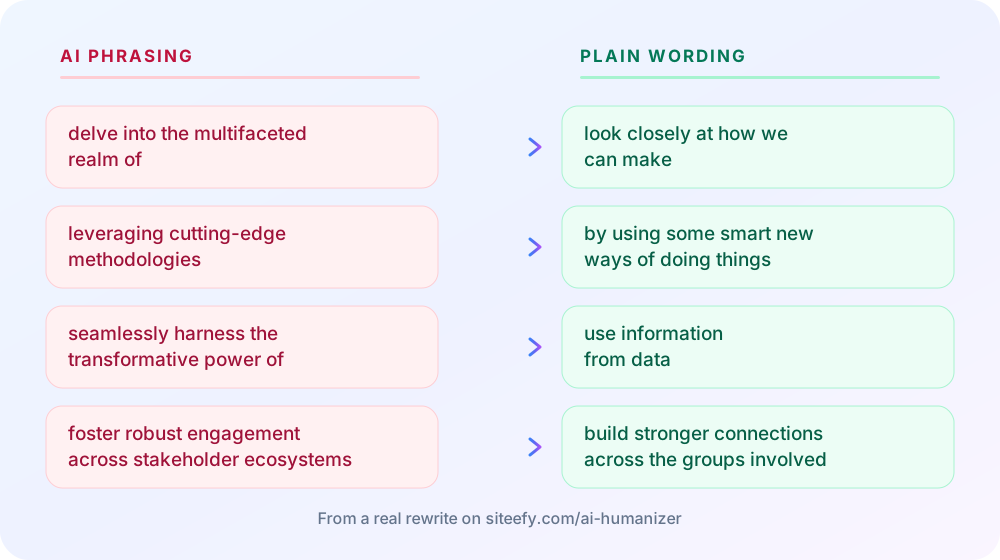
Most humanizers give you one button. This one lets you say what kind of writing you are aiming for, and how far the rewrite is allowed to travel from your draft.
Academic and Technical stay formal and restrained, keeping hedging and precise terms. Blog, Social and Casual allow contractions, shorter sentences and a looser rhythm. Email and Business land in between.
Each pass is independent, so you can run the same draft through two styles and keep whichever reads better.
One slider decides how much licence the rewrite takes. Low tracks your sentence structure closely. High restructures whole sentences. If accuracy matters more than flow, stay low.
Custom instructions take plain English. Name the terms to leave alone, or ask it to avoid a tone. Blocked words Pro lets you rule specific words out entirely.
Any rewrite changes exact phrases, and that is worth planning for if the text is meant to rank. The safest approach is to tell the tool what it may not touch: use custom instructions to name the terms you need preserved, and blocked words to rule specific vocabulary out entirely.
Work in sections rather than pasting an entire article. Per-run limits push you toward this anyway, and it keeps headings and lists in your hands instead of the model’s. Rewrite the body copy, leave the H2s alone, and reassemble.
Before publishing, re-read for three things: that your target terms survived, that headings still say what they said, and that internal links kept sensible anchor text. If you drafted the piece with Siteefy’s free AI Writer, humanizing afterwards is the natural second pass. You can also browse AI writing tools in our directory.
It is an editing tool, not a shortcut. Knowing the difference saves you from the cases where it makes things worse.
Detectors are probabilistic classifiers, not proof. They estimate how closely a passage resembles patterns they were trained on, and that estimate moves with the detector, its version, and the text itself. The same paragraph can score differently across two tools on the same afternoon.
They also get it wrong in a direction worth knowing about: genuinely human writing gets flagged, and the false positives fall disproportionately on non-native English writers, whose sentence patterns tend to be more regular. That is a documented weakness of the category, not a quirk of any one product.
We don’t publish a bypass rate, because no honest one exists. Rewriting for readability often changes what a detector reports, but that is a side effect of writing better, not the promise. Treat any score as a signal to review the draft, not a verdict on it. To check a page before publishing, our AI Content Checker covers the review pass.
An AI humanizer rewrites machine-generated text so it reads the way a person writes: varied sentence lengths, plainer word choices, fewer stock phrases like “delve into” or “in today's fast-paced world.” It is an editing tool. It does not research, fact-check, or add anything new. It only changes how your existing text sounds.
Paste your draft, choose one of twelve writing styles, and set the creativity slider. Low keeps changes conservative, high allows bigger rewrites. You can add custom instructions in plain English. The tool returns a rewritten version beside your original, so you can compare both, regenerate, or copy the result.
The goal is to change wording, not meaning, and lower creativity settings stay closer to your original. Even so, always read the output. Rewriting can soften a precise statement, reword a technical term, or blur a number. Check names, figures, quotes, and anything you would not want restated loosely.
Only if your institution allows it. Most schools have written rules about AI assistance, and presenting AI-written work as your own breaks them regardless of which tool produced it. Polishing writing you actually did is a different thing from passing off generated work. Check your course policy first, and ask if it's unclear.
Yes. AI detectors are probabilistic classifiers, not proof, and scores vary by detector, by version, and by the text itself. They also produce false positives on genuinely human writing, especially from non-native English speakers. We don't publish a bypass rate, because no tool can honestly promise one. Treat detector scores as a signal, not a verdict.
It rewrites sentences, so exact phrases can change. Two features help: custom instructions let you name terms to keep, and blocked words (a Pro feature) let you exclude specific words from the output. Run long articles section by section, then re-check headings, target terms, and internal links before publishing.
Yes, and there's no signup to try it. Guests can rewrite up to 250 words per run straight from this page. Signing in raises those limits, and paid plans allow much longer passages in a single pass. One-time word packs are available if you'd rather not subscribe.
No tool can honestly promise that, and we don't. Detectors keep changing, so any fixed success rate goes stale the week it is published. What the rewrite does is make text sound human: closer to natural rhythm and word choice. If a detector score matters to your work, check it yourself and treat the result as one signal, not a guarantee.
Rewriting your own draft is not plagiarism. Passing off someone else's words or ideas as your own is, and rephrasing them does not change that. A humanizer also does not check originality, so run a separate plagiarism check if you need one. Where AI use has to be disclosed, rewriting does not remove the obligation.
A paraphraser swaps words and reorders clauses sentence by sentence. A humanizer works on how the whole passage reads: sentence rhythm, transitions, and the stock phrasing language models fall into. In practice a paraphraser can still leave text sounding mechanical, because uniform sentence structure is what makes AI writing recognizable.
That average includes every rating we have received, low ones included. The written reviews below are the ones people took the time to type out.