Small startup teams often juggle too much with too few people. AI automation can ease that pressure and help teams work more efficiently.
In this article, I’ll share specific AI tools designed to support small teams of 5 to 10 people.
Essential AI Automation Tools for Startups
There are more AI tools available now than ever, but not every tool fits every team. Before choosing, it helps to spot which tasks take up too much time or slow things down.
Repetitive work, routine decisions, and tasks that pull attention away from growth are usually the best places to start. Once you’ve identified those, the tools below can help you automate them and keep your team moving faster without extra hires.
1. Product Development Automation
Building and improving a product often takes more time and resources than a small team can afford. AI tools help streamline both coding and testing, making the process faster and more manageable.
Benefits of AI in Product Development
✅ Faster development cycles
✅ Fewer bugs and more stable releases
✅ Less reliance on a large engineering team
AI coding assistants help developers write cleaner code, suggest solutions on the spot, and fill in gaps when working through complex logic. This cuts down the hours spent on repetitive tasks or searching for solutions online.
For non-developers or small teams without dedicated engineers, no-code platforms like Lovable turn plain language descriptions into full-stack web applications. This helps small teams prototype or launch simpler apps quickly, without needing to write code.
Testim.io provides AI-powered testing that helps small teams automate web and mobile app tests quickly without deep coding. The platform uses AI to stabilize tests even when the app changes, which helps reduce the time and effort spent on maintenance.
For startups under 20 employees, Testim offers its Professional plan for free, which includes features like AI-driven test creation, TestOps dashboards, API testing, and accessibility checks.
2. Customer Support Automation
AI chatbots help startups automate customer support. They answer common questions using help centers, FAQs, and product guides. This makes responses faster, keeps conversations natural, and reduces the need for a large support team.
Benefits of AI in Customer Support
✅ Quicker responses for everyday questions
✅ Fewer repetitive tickets for the support team
✅ Personalized automation using your company’s knowledge
Tools like Intercom Fin, Zendesk AI, and ChatGPT-powered bots integrate with customer support channels to manage this automatically.
 Intercom
 Zendesk
 ChatGPT
For example, Intercom Fin connects directly to your knowledge base and delivers accurate, on-brand answers. Zendesk AI improves ticket routing and suggests responses for support agents, making human intervention faster and more effective.
For startups with unique products or specialized knowledge, it’s also possible to create custom bots trained on your specific data using tools like Custom GPTs or frameworks like LangChain.
3. Sales and Lead Generation
Another area where AI makes a real difference for small teams is sales and lead generation. Instead of spending hours building lists and guessing who to contact, AI tools help find high-potential leads, rank them by priority, and even automate the outreach.
Benefits of AI in Sales and Lead Generation
✅ Prioritize high-quality leads without guesswork
✅ Save time through automated, personalized outreach
✅ Improve sales efficiency without hiring more salespeople
Tools like Apollo.io, Clay, and People.ai help startups build smarter lead lists, understand which prospects are worth pursuing, and automate communication.
 Apollo.io
 Clay
ClayApollo.io combines lead data with email outreach tools for targeted campaigns. Clay pulls data from different sources to create dynamic, enriched lead lists. People.ai tracks sales activities and highlights efforts that actually drive revenue.
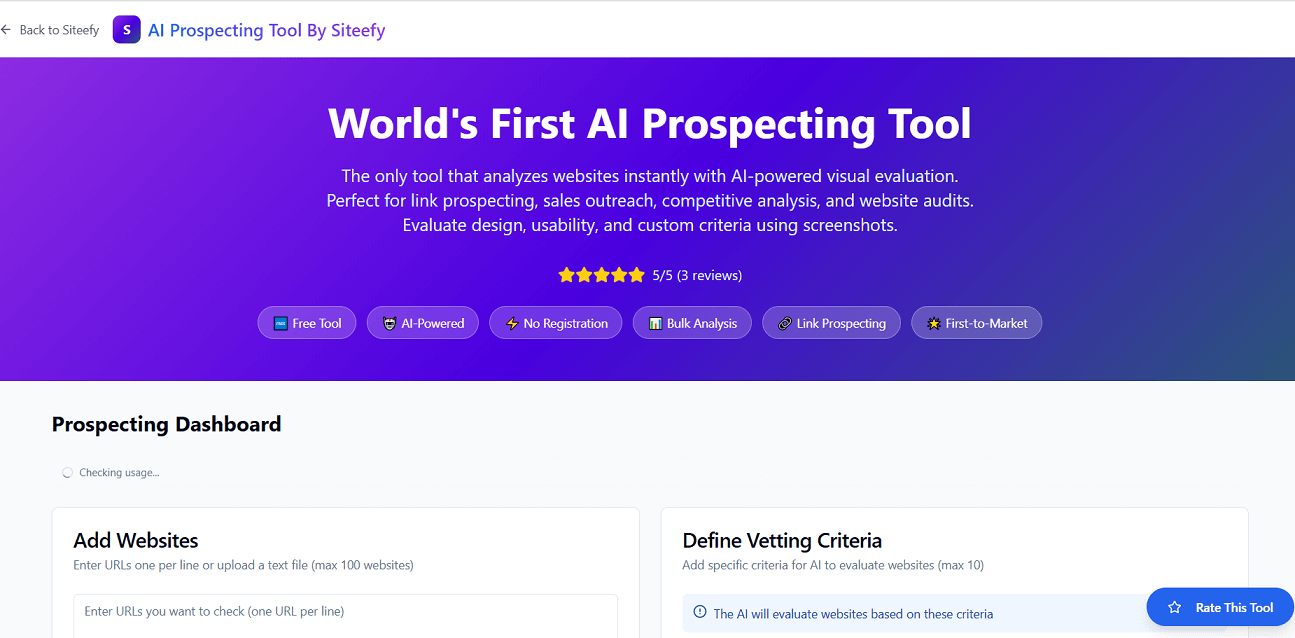
⚡ Bonus Tip: If your startup focuses on outbound sales, link building, or competitor research, our Free AI Prospecting Tool can help qualify prospects faster. It visually analyzes websites in bulk based on criteria like design quality, usability, and relevance. This saves time vetting potential leads and ensures your outreach targets the right companies.
4. Data Analytics and Business Insights
Small startup teams can also unlock insights from their data without needing a full-time analyst. AI-powered analytics tools help translate raw numbers into clear reports and trends that guide better decisions.
Benefits of AI in Data Analytics
✅ Simplifies data analysis for non-technical teams
✅ Automatically generates reports and visualizations
✅ Supports faster, better-informed decisions
Tools like Akkio, Tableau, and Google Looker Studio help small teams analyze data from different sources, spot trends, and measure performance.
 Akkio
AkkioAkkio is particularly useful for creating predictive models and forecasts without coding. Tableau provides advanced data visualization, making complex data easy to understand.
Looker Studio makes it easy to connect data from sources like Google Analytics and create real-time dashboards to monitor marketing and web performance. With ongoing updates, Looker is also introducing AI features like conversational analytics, making it easier to explore data using simple questions.
 Google Analytics
5. Finance & Accounting Automation
Finances can pile up quickly in small teams. AI tools step in to organize bookkeeping, track spending, manage invoices, and predict cash flow, all while cutting down on manual effort.
Benefits of AI in Finance and Accounting
✅ Clear, real-time visibility into cash flow
✅ Automated expense tracking and reporting
✅ Less time spent on bookkeeping and invoice processing
Pilot provides AI-assisted bookkeeping and CFO services specifically designed for startups, keeping financial records accurate and investor-ready. Vic.ai automates accounts payable, processing invoices, and managing approvals with minimal human involvement.
For expense management, Fyle connects to business credit cards and tracks transactions automatically. This ensures up-to-date expense reports without the need for manual entry.
These tools help small teams maintain financial control and stay prepared for growth without the overhead of building a full finance department too early.
Scaling Automation As Your Team Grows
As your startup grows beyond 10 or 20 people, the automation tools that worked in the early days might start to show their limits. Processes naturally become more complex, different teams adopt new tools, and coordinating workflows across the company gets harder.
At some point, no-code tools and basic automations might not be flexible enough to keep everything running smoothly. This is often when startups consider building more customized solutions that fit their evolving needs. At this stage, investing in custom AI development can help create systems specifically designed for your operations.
Planning ahead for scalability helps your automation grow with the team, reducing friction and keeping operations efficient as the business expands.
Checklist for Getting Started With AI Automation
Before adding too many tools, it’s better to start with a few simple steps to keep your automation efforts focused:
✔️ Identify the tasks that take up too much time or create bottlenecks.
✔️ Pick one area to automate first — like coding, support, sales, or finances.
✔️ Start with simple, no-code tools to get quick wins.
✔️ Track the results, such as time saved or faster turnaround.
✔️ Review and adjust your automation every few months
✔️ Choose tools that integrate well so your setup stays flexible as you grow.
❓ Frequently Asked Questions (FAQ)
How Do I Know Which Tasks To Automate First?
Start with tasks that are repetitive, time-consuming, or prone to errors — areas like coding, customer support, or data reporting are usually good starting points.
Do These AI Tools Require Technical Skills To Set Up?
Many tools, especially no-code options, are designed for non-technical users. However, more advanced integrations or custom solutions might need developer support.
Is AI Automation Expensive for Small Teams?
Many AI tools offer affordable plans for startups, and some even have free tiers. Start small and scale up as you see clear benefits.
When Should We Consider Custom AI Solutions?
Custom solutions make sense when your processes are too specific for off-the-shelf tools or when deeper system integrations are needed as the team grows.
Conclusion
AI automation can help your small team work smarter, save time, and grow faster without needing to hire too quickly. Start with the tasks that slow you down the most and build from there — no need to automate everything at once.
Keep experimenting to see what works best for your team. If you want more AI tools or ideas, head to the Siteefy homepage and use the search bar to explore.