With more than 26 million ecommerce websites tracked worldwide, a good shopping experience must do more than showcase quality products. Customers also expect a website that is easy to use, provides the information they need, and makes every step of the buying process as simple as possible.
In this article, we'll explore the e-commerce features that can help businesses provide a smoother and more enjoyable shopping experience.
Features Every E-commerce Website Should Have
| Feature | Purpose |
|---|---|
| Easy Product Discovery | Helps shoppers find products quickly through search, filters, categories, and sorting. |
| Detailed Product Information | Gives shoppers the information they need to evaluate products and make informed decisions. |
| Personalized Shopping Experience | Recommends relevant products based on customer interests and browsing behavior. |
| Trust and Transparency | Builds confidence through reviews, ratings, clear policies, and secure payments. |
| Fast and Simple Checkout | Reduces friction with guest checkout, multiple payment methods, and fewer checkout steps. |
| Mobile Shopping Experience | Makes the website easy to browse and use on smartphones and tablets. |
| Customer Support | Provides assistance through live chat, FAQs, order tracking, and multiple contact options. |
No single feature defines a great e-commerce website. Instead, it's the combination of different tools and functionality that helps shoppers browse products, make informed decisions, and complete their purchases with confidence.
Here are some of the most important features to consider:
1. Easy Product Discovery
Customers should be able to find products without unnecessary effort.
Features that simplify browsing and searching will reduce frustration, help shoppers compare options, and make large product catalogs easier to navigate.
When implementing these features, keep the following recommendations in mind:
- Search: Place the search bar where it can be easily found and make sure it returns relevant results. Features such as autocomplete and suggested searches can also help customers find products more quickly.
- Filters: Allow shoppers to narrow results using filters that match your products, such as price, size, brand, color, or availability. This is especially useful for stores with large inventories.
- Categories: Group products into clear categories so visitors can browse related items and explore the catalog without feeling overwhelmed.
- Sorting options: Let customers sort products by factors such as price, popularity, newest arrivals, or customer ratings, giving them more control over how they browse.
The benefits of these features become more noticeable on marketplaces that offer a large number of products.
A good example is DMarket, an online marketplace for virtual items. It organizes CS skins into a dedicated catalog where shoppers can browse listings, apply filters, and sort results to compare different options and locate specific items more easily.
2. Detailed Product Information
After finding a product, shoppers need enough information to decide if it's the right choice. Product pages should answer common questions and present information in a way that's easy to scan without overwhelming the reader.
Start with high-quality images that show the product from different angles. Depending on the type of product, close-up shots or images showing it in use can give shoppers a better idea of what to expect.
Descriptions should explain the product's main features, intended use, and any details that could influence a purchasing decision. Technical information, such as dimensions, materials, compatibility, or capacity, is often easier to review when presented in a separate specifications section.
Finally, clearly indicate if a product is in stock and, when possible, provide shipping or delivery estimates. Up-to-date product information helps shoppers make informed decisions and reduces uncertainty before completing a purchase.
3. Personalized Shopping Experience
Not every customer visits an online store with a specific product in mind. Some are still comparing options or looking for similar products before making a decision.
Personalization can guide shoppers toward items that match their interests and encourage them to continue exploring the catalog. Consider including the following:
- Product recommendations: Display products related to the item a customer is viewing. This can introduce shoppers to similar products or complementary items they may also be interested in.
- Recently viewed products: Let customers quickly return to products they've already explored. This saves time and makes it easier to compare different options before making a purchase.
- Relevant suggestions: Recommend products based on browsing history, previous purchases, or similar items. The suggestions should feel relevant to the shopper instead of appearing random.
Many popular e-commerce platforms, including Amazon, Temu, and AliExpress, personalize the shopping experience by displaying related products, recently viewed items, and recommendations based on browsing activity.
These features help shoppers continue exploring products that match their interests without having to start a new search.
4. Trust and Transparency
Customers are more likely to complete a purchase when they know what to expect throughout the buying process.
Being transparent about your products, policies, and payment process helps shoppers make informed decisions and shop with greater confidence.
Reviews
Give customers the opportunity to leave honest reviews after their purchase. Display reviews directly on product pages and include both positive and constructive feedback. Responding to customer reviews can also show that you value feedback and are willing to address questions or concerns.
Ratings
Use a clear and consistent rating system across your website. Display ratings on category pages, search results, and product pages so shoppers can compare products without opening every listing. Showing the total number of ratings alongside the average score also provides additional context.
Shipping and Return Policies
Make shipping costs, delivery estimates, and return conditions easy to find before customers reach checkout. Unexpected fees or unclear return requirements can discourage purchases.
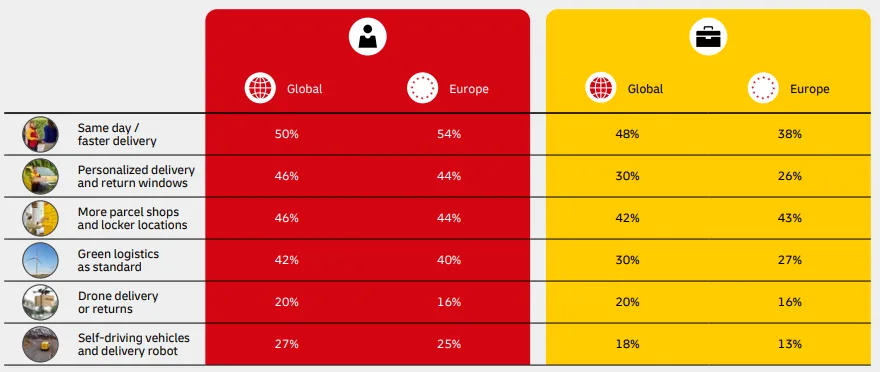
According to the DHL E-Commerce Trends Report 2026, 50% of shoppers worldwide want logistics providers to prioritize faster delivery over the next five years.
Top Logistics Improvements Wanted Over the Next 5 Years
While delivery speed may depend on your shipping partners, providing accurate estimates and clear information helps customers know what to expect before placing an order.
5. Mobile Shopping Experience
A website that works well on a desktop may not provide the same experience on a smartphone or tablet.
Small screens, touch navigation, and different browsing habits require an interface that's easy to use on any device. Consider the following when optimizing your website for mobile users:
- Responsive design: Make sure your website automatically adjusts to different screen sizes without affecting readability or functionality. Product images, text, buttons, and forms should remain easy to view and interact with across all devices.
- Mobile-friendly navigation: Keep menus simple and easy to access on smaller screens. A visible search bar, clear product categories, and touch-friendly buttons can help shoppers move through the website without unnecessary scrolling or extra taps.
6. Customer Support
Even with a well-designed online store, customers may need help before, during, or after making a purchase.
Offering accessible support options can answer questions more quickly, resolve issues efficiently, and improve the overall shopping experience.
Live Chat
Live chat allows customers to receive assistance without leaving the website. If your support team isn't available around the clock, an AI chatbot can answer common questions, provide order information, or recommend relevant help articles. For more complex requests, customers should have the option to continue the conversation with a live support agent.
FAQs
Create a well-organized help center that covers topics such as products, payments, shipping, returns, and account management. Use clear categories and a search function so customers can quickly find answers without contacting your support team.
Order Tracking
Let customers track their orders from their account or through a tracking link sent after purchase. Include order status updates and estimated delivery dates so shoppers can follow their shipment without contacting customer support.
Multiple Contact Options
Offer several ways for customers to get in touch, such as email, phone, a contact form, or live chat. Different customers prefer different communication methods, so providing multiple options makes it easier for them to get assistance when they need it.
How AI Improves the Online Shopping Experience
The features discussed above create the foundation of a positive shopping experience. Many businesses also rely on AI tools to improve product discovery, personalize recommendations, and streamline customer support.
When implemented thoughtfully, AI can simplify routine tasks, personalize shopping, and help customers find what they need more quickly.
- Personalized recommendations: AI can recommend products based on a customer's browsing history, previous purchases, and interests, helping shoppers discover products that are relevant to them.
- AI-powered search: Modern search tools can understand spelling mistakes, synonyms, and natural language queries, making it easier for customers to find products even if they don't know the exact product name.
- AI chatbots: AI chatbots can answer common questions, provide order updates, recommend products, and assist customers outside business hours. For more complex requests, customers should still have the option to speak with a live support agent.
- AI product summaries: Some e-commerce platforms use AI to summarize product descriptions or customer reviews, allowing shoppers to compare products and understand key information more quickly.
As AI becomes more common in e-commerce, businesses should also use it responsibly.
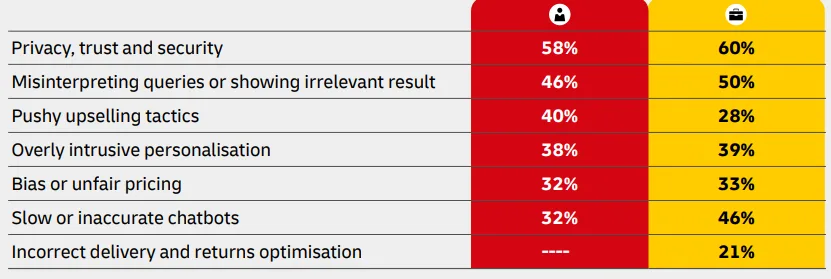
The DHL E-Commerce Trends Report 2026 found that 58% of shoppers and 60% of businesses are concerned about privacy, trust, and security when using AI, while many also worry about inaccurate search results and unreliable chatbots.
Top AI Concerns of Shoppers and Businesses
Balancing AI-powered features with transparency, accurate information, and human support can help businesses create a better shopping experience while maintaining customer trust and growing revenue.