Running an eCommerce business often involves managing orders, inventory, shipping, and customer support at the same time. Delays usually come from gaps between these processes. The right tools help connect systems, reduce manual work, and keep operations consistent.
This guide covers six tool categories that help reduce delays across daily workflows.
Tool Categories for Preventing Delays
| Tool Category | Main Functionality | Examples | Key Benefits |
|---|---|---|---|
| Inventory Management | Real-time stock tracking and synchronization across channels | Cin7, Zoho Inventory | Prevents stock mismatches, avoids overselling, keeps orders moving |
| Preventive Maintenance Software | Scheduling maintenance for equipment and systems before issues occur | MaintainX | Reduces downtime, prevents unexpected failures, keeps operations stable |
| Order Management Systems | Centralizing and automating order processing across channels | Shopify, NetSuite | Speeds up order processing, reduces errors, improves order visibility |
| Warehouse Management Systems | Managing picking, packing, and product location inside the warehouse | ShipBob, Cin7 | Improves fulfillment speed, reduces picking errors, organizes workflows |
| Shipping & Logistics | Managing carriers, labels, tracking, and delivery workflows | ShipStation, Easyship | Ensures timely delivery, reduces shipping errors, improves tracking |
| Monitoring & Hosting | Tracking system performance, uptime, and website availability | Pingdom, UptimeRobot | Detects issues early, reduces downtime, supports fast issue resolution |
 Cin7
Cin7 Shopify
 ShipBob
 ShipStation
 Easyship
 Pingdom
Inventory Management Software: Preventing Stock Delays
Inventory management software keeps track of stock levels across all sales channels and updates availability in real time. It helps avoid situations where products are unavailable or incorrectly listed, which often leads to order delays.
For example, your store may show items as available while the warehouse has already run out. Orders still come in, but fulfillment gets delayed or canceled.
Key Features To Look For
- Real time inventory synchronization across sales channels
- Batch tracking and expiry date monitoring for certain product types
- Automated reorder points and supplier management
- Integration with shipping and order systems for smoother processing
These systems reduce the risk of overselling and keep stock data consistent, so orders move forward without unnecessary interruptions.
Common tools used for this include Cin7 and Zoho Inventory. These platforms help track stock across multiple channels, manage suppliers, and keep inventory updated automatically, which makes day to day operations more predictable.
Preventive Maintenance Software: Avoiding Downtime
Preventive maintenance software helps teams plan regular checks for both physical equipment and digital systems used in eCommerce operations. Instead of waiting for something to break, it schedules maintenance in advance so everything keeps running without interruption.
In practice, this applies to warehouse operations and technical infrastructure. For example, conveyor belts, barcode scanners, or packing machines can stop working during order processing.
At the same time, servers or internal systems can slow down or crash during high traffic. These issues often appear suddenly and delay fulfillment.
Key Benefits
- Reduces unexpected equipment failure in warehouses
- Minimizes system downtime and technical interruptions
- Keeps operations stable during busy periods
For example, MaintainX offers preventive maintenance software that helps teams schedule inspections and track equipment condition. It also helps manage maintenance tasks across warehouse equipment and operational systems.
Order Management Systems: Faster Order Processing
Order management systems handle the full order flow, from when a customer places an order to when it gets shipped. They bring all order data into one place and automate key steps, which reduces errors and speeds up processing.
How OMS Tools Help Prevent Delays
- Route orders to the right warehouse or fulfillment center
- Track order status and keep customers updated
- Manage returns and exchanges within the same system
- Handle orders from multiple sales channels in one place
This keeps orders moving without confusion or manual handoffs between systems.
Common tools used for this include Shopify and NetSuite, which support centralized order processing across online stores.
Shipping & Logistics Software: Preventing Delivery Delays
After orders are processed and packed, the next step is delivery. This is often where delays appear, especially when managing multiple carriers or handling shipments manually.
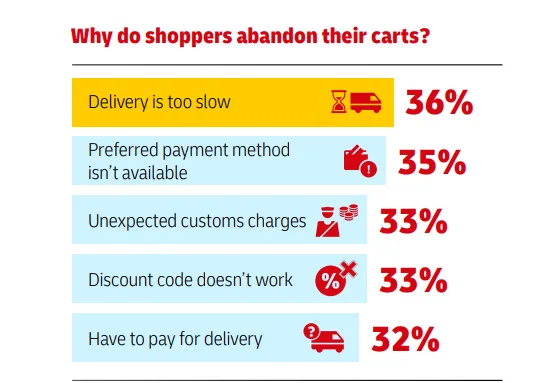
According to the DHL eCommerce Trends Report, 36% of shoppers abandon their carts due to slow delivery, showing how delays at this stage can directly affect order completion.
Main Causes of Cart Abandonment in E-commerce
Shipping and logistics software helps keep deliveries organized and on schedule.
Features That Help Prevent Delays
- Compare carrier rates and delivery times automatically
- Generate shipping labels and customs forms quickly
- Track shipments in real time for teams and customers
- Send alerts when delays or delivery issues occur
These tools connect with order and inventory systems, so shipment data stays accurate and updated without manual input.
Common tools used for this include ShipStation and Easyship, which help manage carriers, tracking, and delivery workflows in one place.
Monitoring & Hosting Tools: Preventing System Downtime
Even with the right processes in place, your eCommerce operations depend on stable systems. Monitoring and hosting tools help detect issues early, so they can be resolved before they affect orders or customers.
Why Monitoring Matters
- Detects slow-loading pages or checkout errors early
- Sends alerts when servers go down or systems fail
- Helps teams fix issues before customers notice
- Supports a more stable and reliable shopping experience
These tools keep your website and systems running smoothly, especially during high traffic periods when downtime can lead to delays.
Tools like Pingdom and UptimeRobot help track uptime, detect errors, and alert teams when issues occur so they can be fixed quickly.
Warehouse Management Systems: Faster Fulfillment
Warehouse management systems focus on how orders move inside the warehouse. They help teams locate products quickly, manage storage, and speed up picking and packing.
Even when inventory and orders are correct, delays can still happen if staff spend time searching for items or handling disorganized workflows. WMS tools reduce these issues and keep fulfillment running smoothly.
How WMS Helps Prevent Delays
- Shows exact product locations inside the warehouse
- Guides faster picking and packing processes
- Reduces errors during order preparation
- Organizes workflows for better efficiency
This helps orders move from storage to shipment without unnecessary slowdowns.
Examples include ShipBob and Cin7, which support warehouse operations and order fulfillment.
Practical Steps To Implement These Tools
Understanding the tools is one part. Applying them in your workflow is what actually reduces delays. Here are a few practical steps to get started:
✔️ Identify where delays happen: Look at your process and find the stages where orders slow down most
✔️ Start with one improvement: Focus on a single issue first, such as order updates or stock syncing
✔️ Use preventive maintenance where needed: Schedule regular checks for warehouse equipment and systems with tools like MaintainX
✔️ Connect your systems: Keep inventory, orders, and shipping tools aligned to avoid data gaps
✔️ Monitor operations continuously: Track system performance and fix issues early before they affect customers
Final Thoughts
Operational delays often come from small gaps between systems, not just one major issue. When inventory, orders, fulfillment, and shipping are not fully aligned, even simple tasks can slow down the entire process.
Using the right mix of tools helps keep each stage connected and running smoothly. From managing stock and processing orders to handling fulfillment and monitoring systems, each tool plays a role in reducing delays.
Start with the area where delays happen most often, then build from there. Even small improvements can make a noticeable difference in how efficiently your operations run.