If you’re building an eLearning startup, choosing the right software developers is one of your first big decisions. The team you hire will shape how your platform works, looks, and grows.
This guide will help you figure out what you need, what to look for, and how to make the best choice.
1. Define Your eLearning Product Vision
Before looking for developers, you need to be clear on what kind of eLearning platform you’re building.
Start with the type of learning experience you plan to offer. Will it focus on live tutoring, a course marketplace, or self-paced learning? A tutoring platform may require scheduling and video calls, while a marketplace might need course uploads, search functionality, and payment features.
Once the model is defined, list the core features your platform should include. These will depend on your specific concept, but there are a few essentials to keep in mind:
- User registration and accounts — so learners and instructors can sign up, log in, and track their activity
- Payment processing — if you’re selling courses or subscriptions, you’ll need secure ways to accept payments
- Video streaming — especially important if your courses rely on recorded lessons or live sessions
- Assessments — such as quizzes or assignments to test progress and keep users engaged
- Analytics — so you and your users can track performance, course completion, or learning trends
You don’t need to figure out every detail right away, but having a prioritized list of features (what’s essential now vs. what can come later) will make your planning much smoother. Even a rough sketch of how you want your platform to look or work can help communicate your idea better.
If you’re not sure where to start, try looking at a few well-known platforms like Khan Academy, Coursera, or Preply to see how they structure content, handle user experience, and organize key features.
 Coursera
2. Consider Your Tech Stack Options
Once you’ve defined your product vision, the next step is to think about how it will be built — technically. You don’t need to be a developer to make smart decisions here, but understanding your options can save you time, money, and future headaches.
If you’re still testing your idea or need to launch quickly, consider using no-code or low-code tools for your MVP (Minimum Viable Product). Platforms like Bubble, Adalo, or Glide let you create working versions of your app without writing code. These are great for validating your concept before investing in full-scale development.
 Bubble
When you’re ready to build a custom product, you’ll need to decide which technologies your team should use. This is where developers will guide you, but it’s helpful to know the basics:
- Frontend (what users see and interact with): Often built with tools like React, Vue.js, or Angular.
Backend (the behind-the-scenes logic and databases): Common options include Node.js, Django, or Ruby on Rails - Mobile Apps: You might go native (Swift for iOS, Kotlin for Android) or use cross-platform frameworks like React Native or Flutter
- Video, Chat, and Real-Time Tools: If your platform includes live tutoring or interactive content, you might need solutions like WebRTC, Twilio, or Daily.co. For recorded lessons, AI video creation tools such as Synthesia or HeyGen can help you produce professional-looking content using realistic AI presenters (avatars) — without the cost of a full video production setup.
 Vue.js
 Node.js
 Django
 React Native
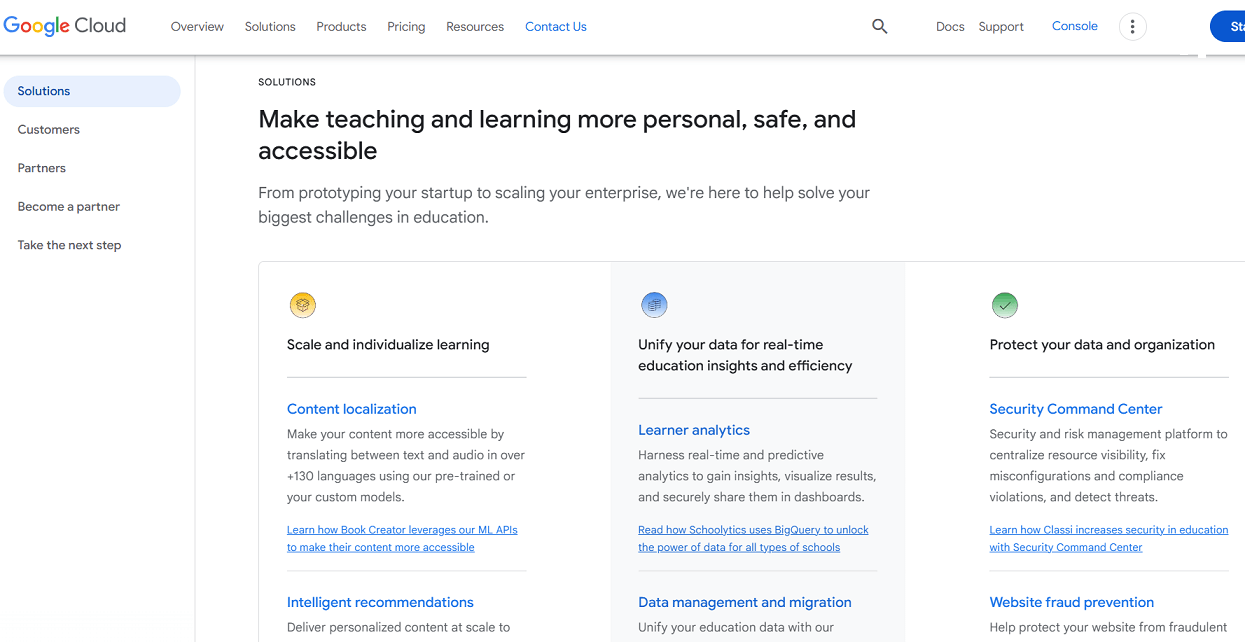
💡 Tip: If you’re planning to grow your platform or need a secure way to manage data, Google Cloud for EdTech offers tools that support education platforms. They include cloud hosting, analytics, and features to help meet privacy and compliance standards.
3. What To Look For in eLearning Software Developers
Now that you know what your platform should include, the focus shifts to finding developers with the right background to turn that plan into a working product—especially in the education space.
EdTech Experience and Industry Knowledge
Not all developers have worked on education platforms, and that matters. Look for teams who understand the specific needs of learners, educators, and admins.
Experience with learning platforms, virtual classrooms, or LMS features is a big plus. It also helps if they’re familiar with common eLearning standards like SCORM, xAPI, or accessibility guidelines, which can save you a lot of rework later. You can also explore companies that specialize in e-learning software development, as these teams often have proven experience with LMS platforms, virtual classrooms, and interactive learning tools.
Strong Communication and Flexibility
Good developers can write great code, but great ones also know how to explain things clearly. Choose a team that communicates well, keeps you in the loop, and isn’t afraid to ask questions.
Since startups often evolve quickly, it’s also important that they’re adaptable and open to changes along the way.
A Proven Portfolio and References
Ask to see examples of past work—especially any related to EdTech. A strong portfolio shows they know what they’re doing. Don’t hesitate to ask for client references or case studies.
A quick chat with a past client can reveal a lot about how the team works under pressure or deals with unexpected issues.
Technical Skills That Match Your Needs
A good team will choose tools that suit your platform’s goals—whether it’s a web app, a mobile product, or something more complex like a real-time learning environment.
The key is that their past experience shows they can handle the kind of solution you’re building.
4. Choose Your Development Model
How you choose to build your eLearning product is just as important as who builds it. There are three common approaches: hiring an in-house team, working with an external agency or freelancers, or using a combination of both.
Each has its own strengths and trade-offs, and the right choice depends on your goals, timeline, and available resources.
In-House Development
Having your own developers gives you direct control over the project. Communication is often faster, and your team is deeply invested in your company’s success. However, hiring, onboarding, and retaining top tech talent can be expensive and time-consuming. You may also struggle to find specialists in eLearning among your local talent pool.
Outsourcing
Outsourcing allows you to move faster because experienced teams already understand how to do it. Outsourcing lets you access seasoned professionals who have built eLearning platforms before. This can speed up your launch, reduce costs, and bring in outside perspectives.
The downside? Communication can suffer if your partner is in a different time zone, and you’ll need clear contracts to manage expectations.
Hybrid Approach
A hybrid model combines the best of both worlds. You might keep a small in-house team to manage the product vision and user experience, while outsourcing specific technical tasks or full-feature development. This setup gives you flexibility, helps control costs, and lets you scale more easily as your platform grows.
✨ Case Study: Tutor House’s Shift From In-House to Outsourcing
Tutor House, a UK-based EdTech startup, set out to build a platform that connects students with tutors. They started with an in-house team of four full-time developers to build the product from scratch. While this gave them full control early on, they soon ran into challenges managing development timelines and maintaining consistent progress.
As the technical complexity of the project grew, it became clear they needed a team with deeper EdTech experience. To move forward, Tutor House decided to outsource development to Apiko, a company known for building scalable eLearning solutions.
This decision allowed them to tap into proven methods and industry knowledge, which helped them overcome earlier obstacles and move their project forward. Tutor House’s experience shows the value of choosing partners who understand the unique demands of online education.
5. How To Assess & Choose the Best Development Partner
Once you have a shortlist of potential development teams, the next step is a careful evaluation. A good partner should not only be technically strong but also aligned with your goals and easy to work with.
- Review Portfolios and Case Studies: Take time to explore their previous work. Look for platforms that are similar to what you’re building, especially in the education space. If they provide case studies, these can give you a clear view of how they solve problems and what kind of results they deliver.
- Interview the Team: Speak directly with the people who would work on your project. This includes developers, project managers, and designers. These conversations help you get a sense of their communication style, attention to detail, and ability to understand your product.
- Test Their Problem-Solving Approach: Give them a realistic scenario based on your platform’s needs. For example, ask how they would handle a sudden increase in users or how they would add a new feature mid-development. Their response will show how they think through challenges and whether their solutions are practical.
- Speak to Past Clients: Ask for references and follow up with past clients. These conversations can help you understand how the team performs under pressure, how well they communicate, and whether they delivered on expectations.
- Clarify Ownership and Support Terms: Before any agreement is signed, make sure you understand who will own the code and intellectual property. It is also important to ask about post-launch support, such as handling bugs, updates, or improvements as your platform evolves.
6. Manage the Development Process & Plan Your Budget
Once development is underway, your role doesn’t stop. Staying actively involved helps keep the project aligned with your goals and avoids costly delays.
Start with clear milestones that break the project into phases. Using agile development methods can help your team work in short cycles, review progress often, and adapt quickly when things change. This kind of structure is especially useful for startups building something new and user-focused.
Make communication a regular part of the process. Join update calls, give feedback early, and test features as they’re developed. The more engaged you are, the easier it is to catch issues early and ensure the product meets your expectations.
Budget planning is just as important as managing the build itself. Keep an eye on both short-term development costs and long-term expenses like server hosting, content storage, third-party tools, and ongoing maintenance.
Planning for these early will help you avoid surprises later and make smarter decisions about where to invest your resources. For example, AI tools like Coursebox or Tutor AI can help speed up course creation and tutoring features, allowing you to launch faster while keeping development costs under control.
A hands-on approach paired with thoughtful budgeting gives your platform a much stronger foundation to grow from.
Final Words
I hope this guide makes your path to building an eLearning platform a little clearer. Starting can feel overwhelming, but each step gets you closer to your goal.
Keep your learners in mind and let their needs guide your decisions. Wishing you success as you turn your vision into something that truly makes a difference.