
Creator
Tim Berners-Lee
Built the first browser, server, and HTTP website.
First host
nxoc01.cern.ch
The original HTTP host before info.cern.ch became familiar.
Web opened freely
30 April 1993
CERN made the Web software freely available.
What the first website contained
The first website was a short directory for the World Wide Web project. It explained the idea and sent visitors to the information they needed next.
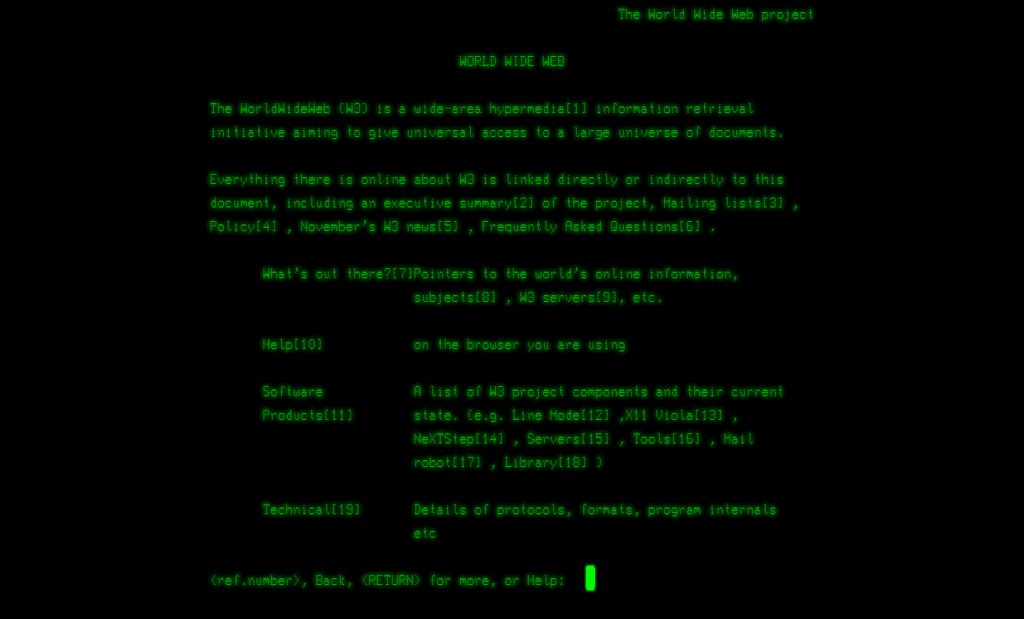
A readable map of the surviving page
The labels below follow the early CERN page. The explanations show what each link helped a visitor do.
info.cern.ch/hypertext/WWW/TheProject.htmlWorld Wide Web
The page introduced the Web as a system for reaching linked information, then acted as the entrance to the whole project.
- What’s out there?
- A directory of information and servers already available.
- Help
- Instructions for the browser a visitor was using.
- Software products
- Browsers, servers, tools, and other project software.
- Technical
- The protocols, formats, and internal workings of the Web.
- People and history
- Who contributed and how the project developed.
- How can I help?
- Ways other people could support and expand the project.
- Getting code
- Instructions for downloading the software.
Its links led to an explanation of the project, a directory of information already online, browser help, available software, technical documentation, the people involved, project history, and instructions for getting the code.
No complete snapshot from 1990 survives. The page available today is a restored version based on an early copy preserved from 1992, so it shows the early site clearly without proving every word was present on its first day.
It was a homepage, help center, and developer guide
Modern websites often separate these jobs. The first website handled all three on one small page.
Homepage
Introduced the World Wide Web project and its purpose.
Help center
Explained how to browse and find information.
Developer guide
Linked to software, technical rules, servers, and code.
As a homepage, it explained what the project was. As a help center, it showed visitors how to use a browser and find information. As a developer guide, it linked to protocols, software, server instructions, and downloadable code.
That combination mattered more than its appearance. The page did not merely announce the Web; it helped new users understand it and helped new contributors extend it.
Who created the first website
Tim Berners-Lee created the first website while working at CERN, but the wider project quickly became a team effort.
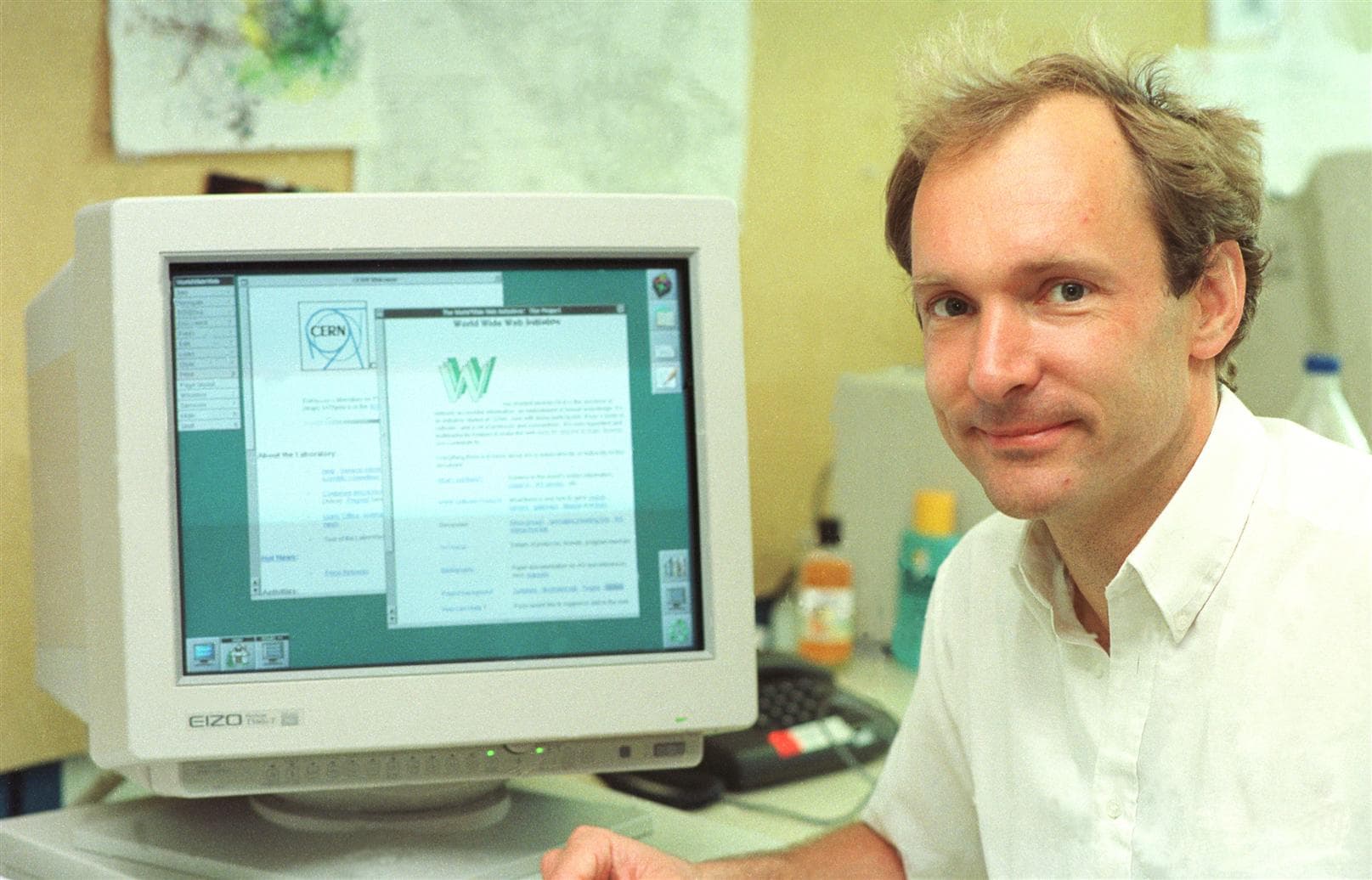
Berners-Lee proposed the Web in 1989, then wrote the first browser and editor, the first server, and the first HTTP website in 1990.
Robert Cailliau helped secure support, organize contributors, and argue that CERN should release the technology without royalties. Nicola Pellow developed the line-mode browser that made the Web usable on computers beyond Berners-Lee's NeXT machine.
The first page appeared in 1990, not 1991
Several dates are called the birthday of the Web because the project moved from an idea to a public system in stages.
The Web did not begin on one single day
The idea, working website, public announcement, and open release happened at different stages.
That is why both 1990 and 1991 often appear in accounts of the first website.
- March 1989
The proposal
Tim Berners-Lee proposed a linked information system at CERN.
- Late 1990
The first working Web
The first browser, server, and HTTP website were running on a NeXT computer.
- August 1991
The project reached the internet
Project files and announcements introduced the Web beyond CERN.
- 30 April 1993
CERN opened the software
CERN made the Web software freely available for anyone to use.
The proposal was written in March 1989. The first server, browser, and HTTP page were working at CERN by the end of 1990. CERN opened the project more widely during 1991, including internet announcements in August.
The date 6 August 1991 is therefore important, but it was not the day the first website was created. It marks one of the announcements that introduced the work to people outside CERN.
Why the first website mattered
The page joined three things that made the Web useful: a public address, links to other documents, and instructions that allowed more people to participate.
The Web could grow without one company approving every page or link. People could publish a server, connect documents, and build compatible software around shared rules.
On 30 April 1993, CERN made the Web software freely available. That decision removed a major barrier to adoption, while later browsers such as Mosaic made the system easier for a broader public to use.
The practical lesson: the first website worked because it explained the new system and gave visitors clear links for taking the next step.
Can you still visit the first website?
You can visit CERN's restored early website at info.cern.ch, but it should not be mistaken for an untouched copy saved on the exact day in 1990.
Visit CERN’s restored early website
https://info.cern.ch/hypertext/WWW/TheProject.htmlBerners-Lee identified the first HTTP address as nxoc01.cern.ch/hypertext/WWW/TheProject.html. The computer was later known through the info.cern.ch alias.
The surviving page preserves the early structure and content of the project site. It remains useful because its links show how the creators introduced the Web, documented it, and invited other people to help build it.
Sources and verification
How this history was verified
Siteefy checked the dates, addresses, people, and surviving page against first-hand accounts and official historical records from CERN and W3C.
Checked July 28, 2026
First-hand description of the first HTTP page and its address.
Checked July 28, 2026
Detailed 1991 release and public-access timeline.
Checked July 28, 2026
CERN history and the 30 April 1993 public-domain decision.
This page is reviewed when CERN or W3C publishes new historical material or corrects an existing record.